Few dishes carry the charm of both royalty and comfort food like Beef Stroganoff. Originating in 19th-century Russia, this creamy, savory delight has since made its way into kitchens around the world — from upscale restaurants to cozy family dinners.
Whether you’re a food enthusiast, a history buff, or simply love hearty meals, Beef Stroganoff is a dish that deserves a spot on your table and in your story.
📜 A Glimpse into History
Beef Stroganoff (Бефстроганов) was reportedly created in honor of Count Alexander Stroganov, a wealthy Russian aristocrat during the Tsarist era. The original dish was much simpler — seared beef pieces in a mustard and broth sauce. Over time, chefs added mushrooms, onions, and cream, crafting the now-famous version we know today.
By the mid-20th century, it had spread to Europe, America, and Asia, adapting to local tastes with ingredients like sour cream, wine, or even Worcestershire sauce.
🍽️ What’s in a Classic Beef Stroganoff?
A traditional Russian Beef Stroganoff is rich and balanced — savory, creamy, and filling without being overwhelming.
Core Ingredients:
- Tender strips of beef (typically sirloin or tenderloin)
- Onions and garlic
- Mushrooms (white button or cremini)
- Sour cream (the soul of the sauce)
- Beef broth or white wine
- Mustard (often Dijon, for subtle tang)
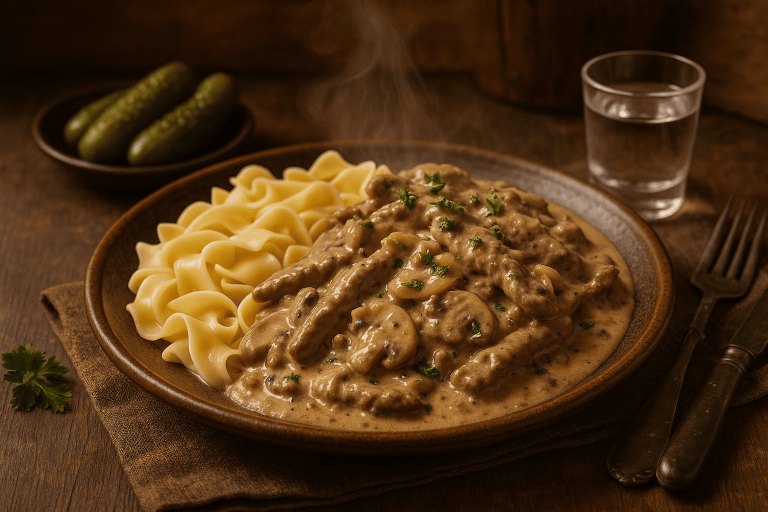
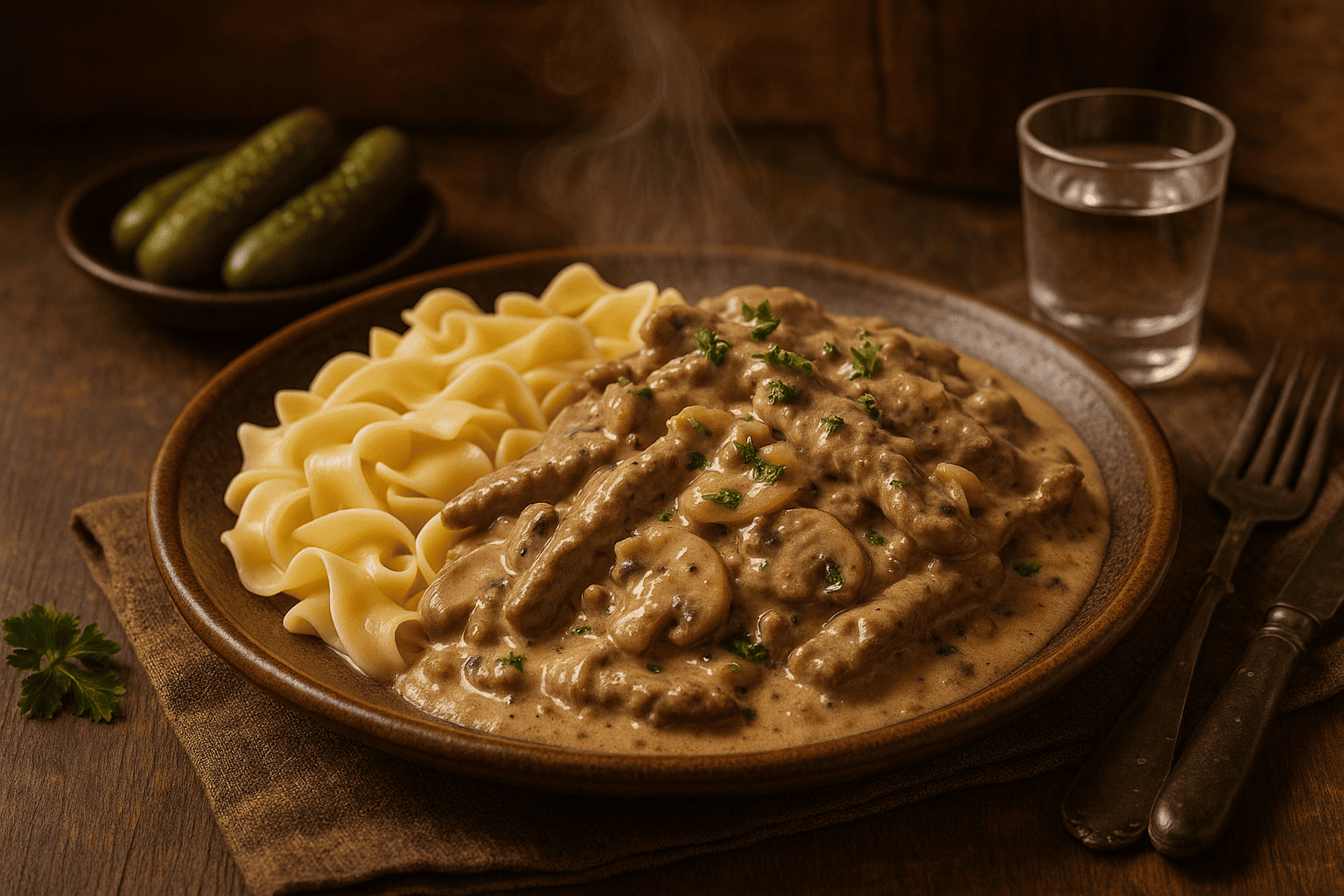
- Served with: egg noodles, mashed potatoes, or rice
The dish is typically cooked quickly over medium-high heat to preserve the juiciness of the beef and the texture of the sauce.
👩🍳 Modern Variations Around the World
- American style: Often includes Worcestershire sauce and is served over egg noodles.
- Japanese style: Known as Bīfu Sutoganofu, made with rice and sometimes demi-glace sauce.
- Vegan versions: Use tofu or mushrooms instead of beef, with coconut cream or vegan sour cream.
🥢 How to Serve Beef Stroganoff
- Garnish with fresh parsley or dill
- Add a side of pickles or beet salad for an authentic Russian touch
- Serve hot with egg noodles, mashed potatoes, rice, or buckwheat (grechka)
❤️ Why People Love It
- Quick to cook, yet tastes like it took hours.
- Luxurious and comforting at the same time.
- Perfect for weeknight dinners, yet elegant enough for guests.
- Easily adaptable to dietary preferences.
✈️ Cultural Tip
In Russia, it’s often served with grechka (buckwheat) instead of noodles. Try it for an authentic Eastern European experience!